

Future Innovators: Why Tomorrow's Big Ideas Begin with Today's Curious Minds
What makes an innovator?
Is it someone who invents new technology? Makes a scientific breakthrough? Or finds an imaginative solution to an everyday problem?
Perhaps all three. But I believe innovation begins with something much simpler: the confidence to ask a question, challenge an assumption and imagine that something could be done differently.
"Why does that happen?"
"What if we tried another way?"
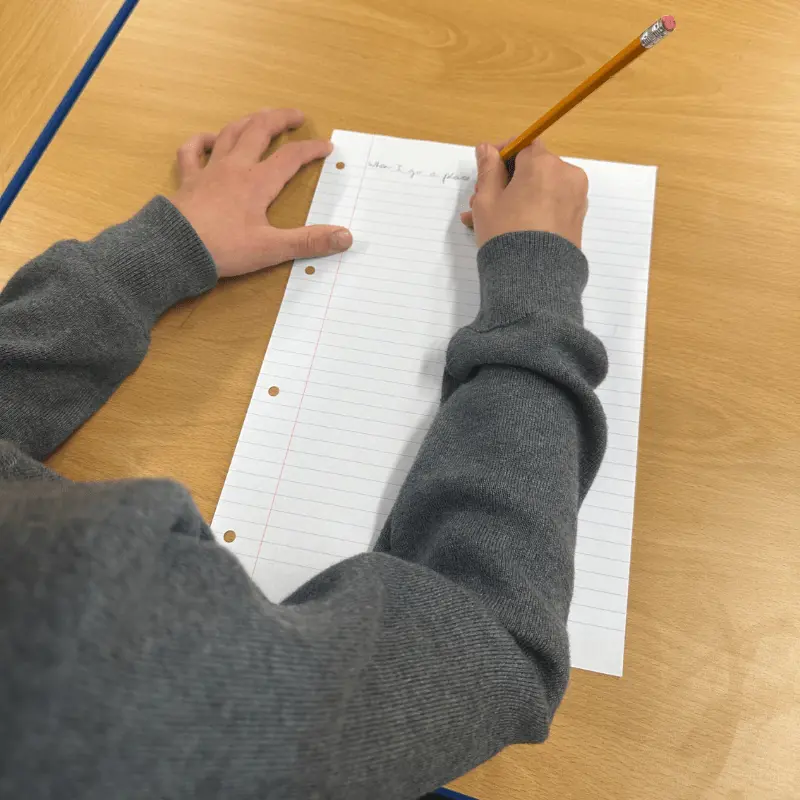
These are questions we hear from children every day. And within them lie some of the most important qualities we can nurture: curiosity, originality, independent thinking and the confidence to explore the unfamiliar.
Interestingly, these are also qualities the wider world increasingly recognises as essential for the future.
The World Economic Forum's Future of Jobs Report 2025 identifies analytical thinking, creative thinking and curiosity among the capabilities employers value most or expect to grow in importance. LinkedIn's Skills On The Rise 2026 highlights communication and collaboration alongside emerging technological skills, while Microsoft's Work Trend Index 2026 reinforces the importance of human judgement and critical thinking as artificial intelligence takes on more tasks.
There is a compelling message here for education.
As technology becomes increasingly capable of generating information, producing solutions and completing tasks, the distinctly human ability to ask worthwhile questions, think creatively, make connections and exercise sound judgement becomes more important, not less.
The innovators of tomorrow will not simply be those who know how to use technology. They will be those who can identify problems worth solving, see possibilities others may have missed and bring imagination, understanding and thoughtful judgement to the challenges they encounter.
And these qualities are intentionally nurtured from a child's very first day at Lochinver, growing throughout their school journey.
At Lochinver House School, our seven Learning Powers provide a framework for developing these habits of mind.
Curiosity encourages children to question, investigate and explore, while Focus helps them pursue ideas with concentration and depth. Originality and Initiative encourage children to think differently, make unexpected connections and recognise that their ideas have value. Reflectiveness and Resilience help children evaluate their thinking, learn from setbacks and improve their ideas. The first solution is rarely the only one, or necessarily the best. Learning to reconsider, adapt and try again is an essential part of becoming an effective problem-solver. And Collaboration reminds us that innovation rarely happens in isolation; the ability to listen, exchange ideas and work effectively with others is equally important.
One of the things I value about our International Early Years Curriculum and International Primary Curriculum (IPC) is the way it encourages children to make connections between subjects and see the relevance of what they are learning. Whether exploring sustainability, investigating scientific ideas or examining history and different cultures, pupils are challenged not simply to acquire knowledge, but to question it, apply it and consider different perspectives. This is where curiosity begins to develop into deeper understanding and genuinely independent thinking.
I have never believed that curiosity and originality should come at the expense of academic rigour. Quite the opposite. Strong subject knowledge, intellectual challenge and high expectations provide the foundations from which genuinely original thinking can grow. From Computing, Robotics and STEM to the humanities, the arts, sports and our broad co-curricular programme, we want children to encounter demanding ideas, explore different perspectives and discover what they are capable of achieving.
I am particularly proud that at Lochinver we deliberately create the conditions in which curiosity and original thinking can flourish. Our core values of kindness, honesty and respect help establish a culture where children feel confident to question, contribute and explore.
And we must resist the temptation to put innovation into neat little glass jars, as though curiosity can only emerge from carefully planned activities or prescribed moments of questioning.
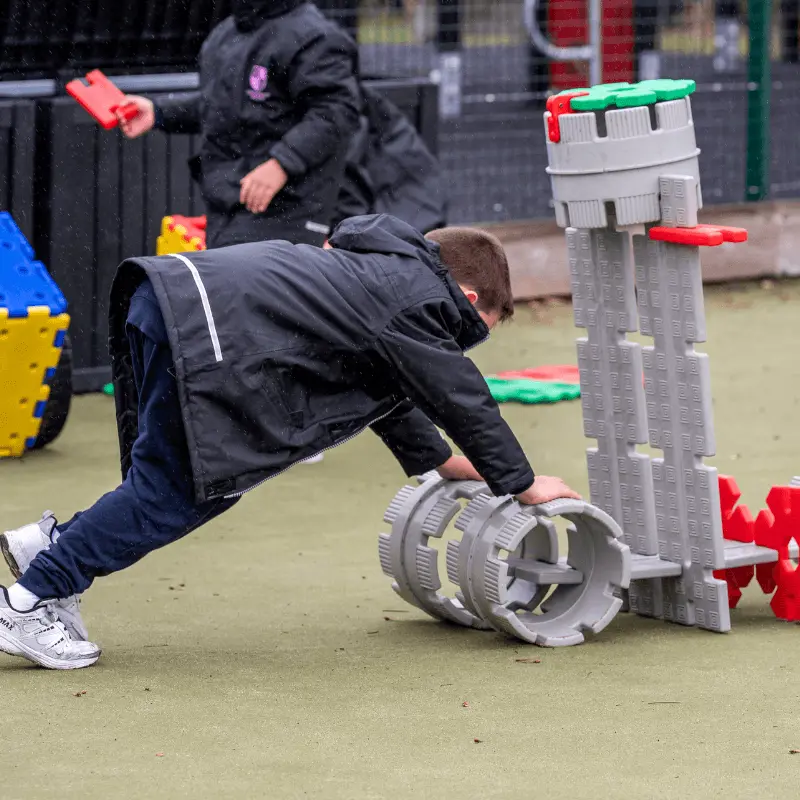
Of course, intentional teaching matters enormously. But so does the professional judgement of our highly experienced teachers who recognise when to follow a child's unexpected question, adapt their plans and allow learning to take an exciting, unanticipated direction. The most memorable examples are often prompted not by the teacher's plan, but by a pupil's curiosity.
At Lochinver House, these moments emerge across the school, often when least expected. A Reception child exploring a topic on Space recently asked what would happen if an astronaut removed their helmet in space. The question itself mattered less than what followed: discussion, speculation and reasoning as the children explored possibilities, tested ideas and sought to understand a world beyond their direct experience.
The same spirit of inquiry can be seen in our Drama lessons. Pupils at Lochinver have asked whether the audience might want the villain rather than the hero to succeed, whether the Big Bad Wolf could actually be innocent, or whether a story really needs an ending at all. These questions are not always seeking a definitive answer. Instead, they encourage pupils to challenge assumptions, consider different perspectives and become comfortable with uncertainty. In many ways, that willingness to explore alternative possibilities lies at the heart of both creativity and innovation.
Elsewhere at Lochinver, a Year 5 pupil's question about the relationship between Sundiata Keita and Mansa Musa transformed a History lesson into a wider discussion about leadership, influence and how individuals can change the course of history. In Science, a Year 8 pupil recently asked: "If every cell contains the same DNA, what if they all behaved in exactly the same way? Why doesn't a heart cell become a nerve cell?" It is a deceptively simple question, yet one that reaches into some of the most fundamental principles of biology. More importantly, it reflects the kind of intellectual curiosity we seek to nurture: the ability to identify an apparent contradiction, question an assumption and pursue a deeper understanding.
In each case, the lesson moved beyond the original plan because a Lochinver pupil's curiosity led it there.
As girls and boys now learn alongside one another at Lochinver, we are equally determined that every child should see themselves as a capable thinker, problem-solver and innovator. No subject, idea or opportunity should feel beyond their reach because of assumptions about what girls or boys might enjoy or achieve.
Ultimately, developing future innovators is about far more than preparing children for the next technological advance. It is about nurturing curious, independent thinkers with the knowledge, imagination and judgement to make a difference.
I believe this responsibility begins from a child's earliest years. At Lochinver, one of the leading independent schools in Hertfordshire, I see every day how naturally curious young children are. In our school and beyond, our role is not simply to provide answers, but to create an environment in which children feel confident asking questions, exploring ideas and developing their own understanding of the world.
And tomorrow's big ideas may well begin with a question being asked in a Lochinver classroom today.
"What if…?"